Eleven Spanish-Language Movies We Recommend Watching

I keep coming back to these Spanish-language films because the stories hold up. They come from Spain and Latin America, so you also hear different accents and everyday expressions if you’re learning Spanish.
We watched all eleven and would still recommend them. Some are on Netflix; others need a rental or are harder to find. The availability table below separates those options.
Choose your country before following a streaming recommendation. A film on US Netflix can be absent from the Australian catalogue, and a digital rental costs extra even if you already subscribe to the same company.
Updates
* 4 October 2026: Checked the films’ viewing options and added links to US and Australian listings, including rentals and titles with no confirmed local streaming offer.
Contents
- Where to watch in October 2026
- Roma
- También la lluvia (Even the Rain)
- El ciudadano ilustre (The Distinguished Citizen)
- La noche de 12 años (A Twelve-Year Night)
- El fotógrafo de Mauthausen (The Photographer of Mauthausen)
- Tarde para la ira (The Fury of a Patient Man)
- El laberinto del fauno (Pan’s Labyrinth)
- Palmeras en la nieve (Palm Trees in the Snow)
- Temporada de caza (Hunting Season)
- Adú
- El faro de las orcas (The Lighthouse of the Orcas)
- What should you watch first?
Where to watch in October 2026
I checked the JustWatch listings on 4 October 2026. Each country entry links to its listing. “No streaming option listed” means the tracker didn’t show an online offer in that country; it doesn’t rule out a DVD, a library copy or another country’s catalogue. I couldn’t confirm Australian availability for The Distinguished Citizen or the 2017 Hunting Season.
| Film | United States | Australia |
|---|---|---|
| Roma | Netflix | Netflix |
| Even the Rain | Netflix | No streaming option listed |
| The Distinguished Citizen | No streaming option listed | Availability unconfirmed |
| A Twelve-Year Night | No streaming option listed | No streaming option listed |
| The Photographer of Mauthausen | Netflix | Netflix |
| The Fury of a Patient Man | Rent/buy: Apple TV Store or Fandango at Home | No streaming option listed |
| Pan’s Labyrinth | Rent/buy: Amazon Video | Beamafilm; rental options also listed |
| Palm Trees in the Snow | Rent/buy: Amazon Video, Apple TV Store or Fandango at Home | No streaming option listed |
| Hunting Season (2017) | Rent/buy: Amazon Video or Apple TV Store | Availability unconfirmed |
| Adú | Netflix | Netflix |
| The Lighthouse of the Orcas | Netflix | Netflix |
If you want to start with a Netflix title, Roma, The Photographer of Mauthausen, Adú and The Lighthouse of the Orcas have listings in both countries. Check again before paying: catalogues change, and the streaming service has the final say.
Roma
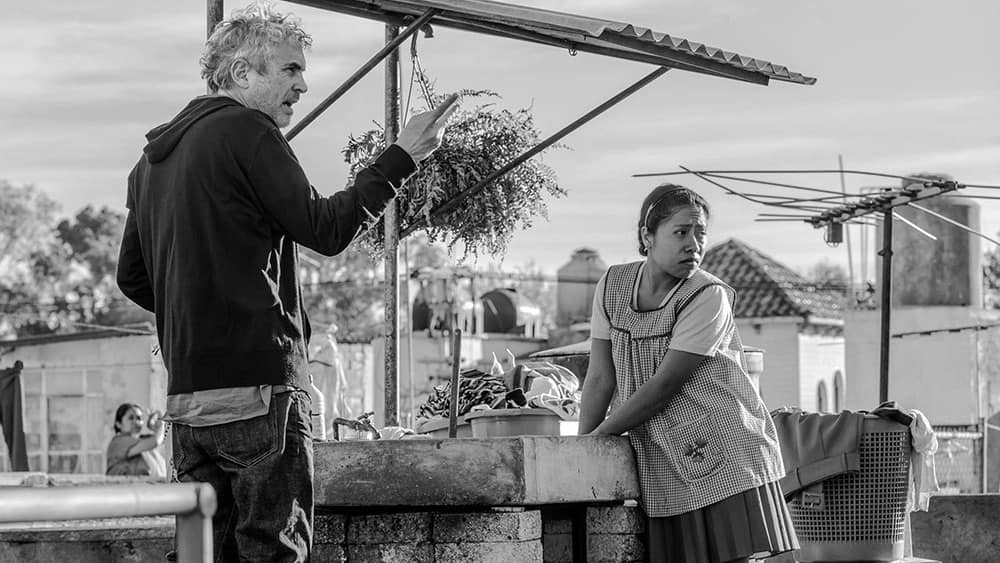
If you watch one film from this list, Roma is still my first choice. Alfonso Cuarón’s black-and-white drama follows Cleo, a domestic worker for a middle-class family in Mexico City in the early 1970s, while her life and the family’s life both change around her.
The film is patient rather than plot-heavy. It gives ordinary domestic scenes enough time to become important. Most of the dialogue is Mexican Spanish, with Mixtec also spoken in parts of the film.
También la lluvia (Even the Rain)
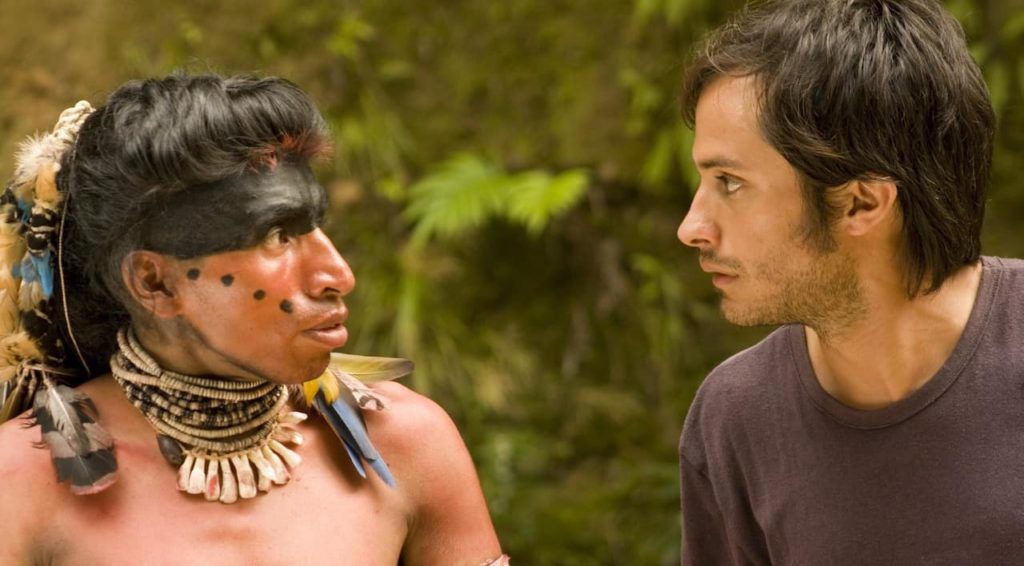
A Spanish film crew goes to Bolivia to make a movie about Christopher Columbus and the exploitation of Indigenous people. They choose Bolivia partly because production is cheap. Then the 2000 Cochabamba Water War begins around them.
The obvious tension is the point: a crew making an anti-colonial film is also benefiting from local economic inequality. Gael García Bernal plays the director, while Juan Carlos Aduviri is excellent as Daniel, a local actor who is also involved in the protests.
El ciudadano ilustre (The Distinguished Citizen)
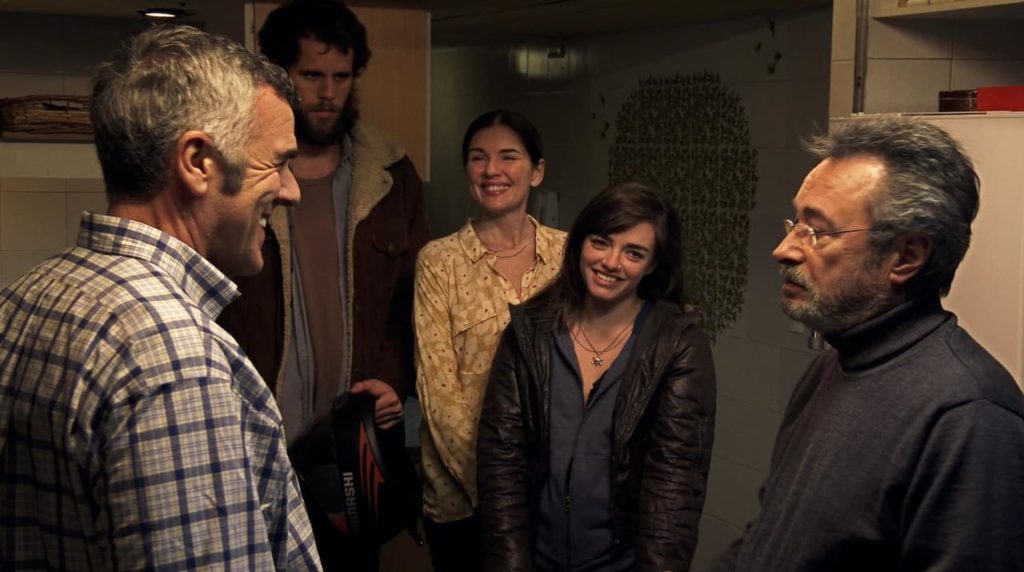
An Argentine novelist living in Europe wins the Nobel Prize and then, after refusing years of invitations, agrees to return to his small hometown to receive a local award. The welcome begins warmly and becomes increasingly uncomfortable.
I like the dry humour and the way the film plays with the writer’s dependence on the town he insists he has outgrown. The Argentine Spanish is also helpful if you want to get used to voseo and Rioplatense pronunciation.
La noche de 12 años (A Twelve-Year Night)

This is a much harder watch. It dramatises the imprisonment of three Tupamaro political prisoners during Uruguay’s military dictatorship, including José “Pepe” Mujica, who later became president of Uruguay.
The men are moved between prisons, kept in extreme isolation and subjected to psychological abuse. The film is interested less in heroic speeches than in what prolonged confinement does to a person.
El fotógrafo de Mauthausen (The Photographer of Mauthausen)

This historical drama tells the story of Francesc Boix, a Spanish Republican prisoner at the Mauthausen concentration camp who helped preserve photographs documenting crimes committed there.
The subject matter is grim and the violence isn’t incidental. I’d choose it because the historical story is remarkable, not because it makes comfortable language-learning background television.
Tarde para la ira (The Fury of a Patient Man)

A quiet man becomes involved with the partner of a recently released prisoner. It slowly becomes clear that he has his own connection to the violent robbery that put the prisoner away.
This is a compact Spanish revenge thriller with very little wasted dialogue. The everyday Madrid speech is much less polished than the Spanish you hear in learner material, which is part of why it is helpful once your listening is reasonably strong.
El laberinto del fauno (Pan’s Labyrinth)

Guillermo del Toro’s dark fantasy is set in 1944, after the Spanish Civil War, during the early Franco dictatorship. Ofelia travels with her pregnant mother to live with Captain Vidal, a brutal officer fighting Republican guerrillas. She discovers a labyrinth and a faun who gives her a series of tasks.
The dialogue is overwhelmingly in Spanish. Its fantasy and political violence sit beside each other because, for Ofelia, both worlds are dangerous and governed by arbitrary rules.
Palmeras en la nieve (Palm Trees in the Snow)

This sprawling romance moves between Spain and colonial Spanish Guinea. A young Spaniard travels to Fernando Pó in the 1950s to work on a cacao plantation and falls in love with a local woman, while a later generation uncovers the family history.
It’s melodramatic and long, but the setting is unusual and the film at least gives viewers a reason to learn that Spain had an African colony that became Equatorial Guinea in 1968.
Temporada de caza (Hunting Season)
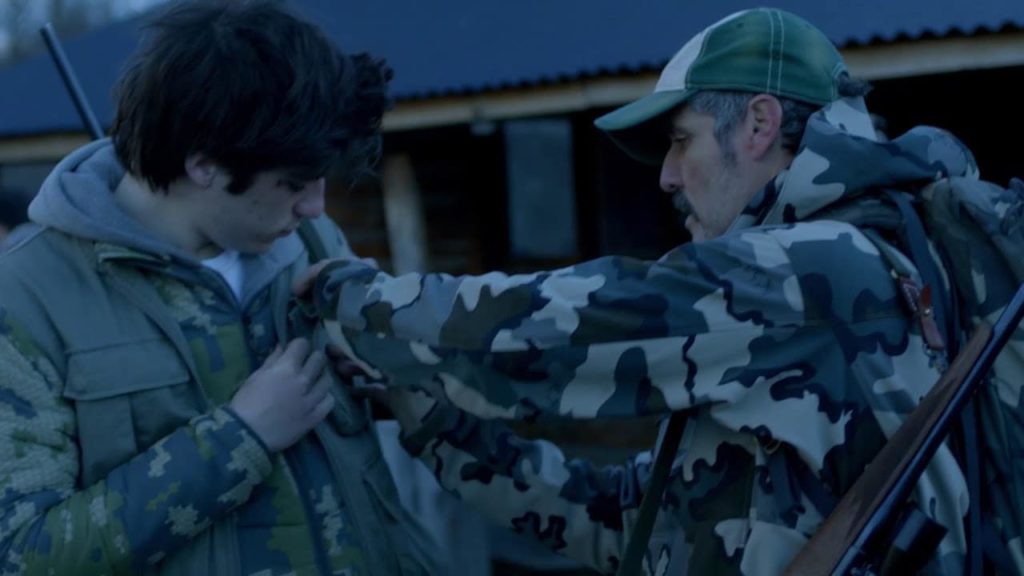
After his mother dies, a troubled teenager from Buenos Aires is sent to stay with his estranged biological father in Patagonia. The father works as a hunting guide, and much of the film’s tension comes from two people who don’t know how to speak to each other trying to become family.
It’s quieter than most films here and gives you plenty of Argentine Spanish without a frantic plot competing for attention.
Adú

Adú follows several connected stories around migration between Africa and Europe, including a Cameroonian child attempting to travel north after tragedy at home. Parts of his story are in French, while the Spanish characters’ stories are in Spanish.
It’s emotionally direct and sometimes manipulative, but the child’s story stayed with me. I wouldn’t choose it if your only goal is maximum minutes of Spanish dialogue; choose it because the subject interests you.
El faro de las orcas (The Lighthouse of the Orcas)
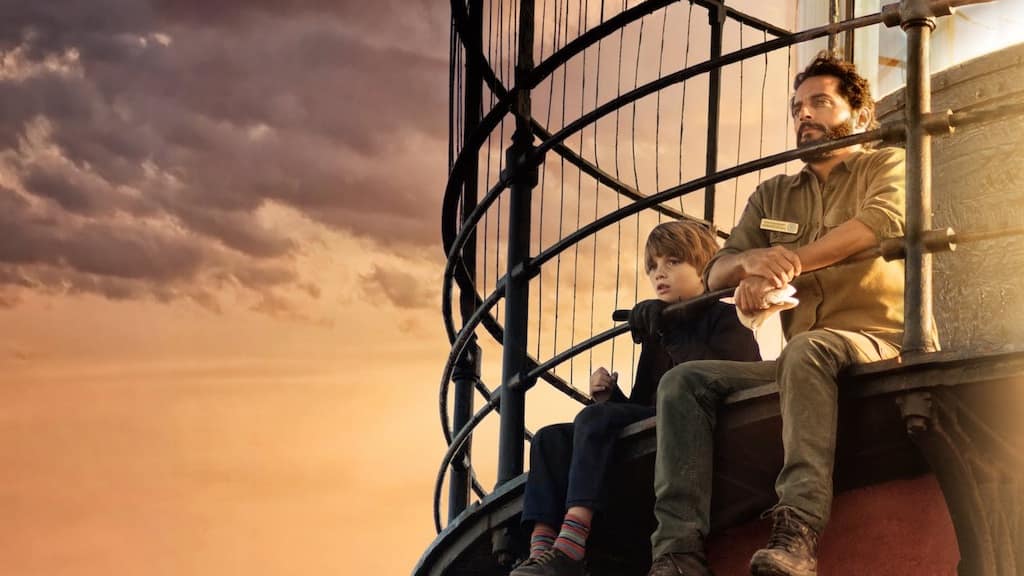
A Spanish mother travels with her autistic son to Patagonia after seeing footage of an orca researcher whose relationship with the animals seems to reach her child. The film is loosely inspired by real people and events, then takes plenty of dramatic licence.
The scenery is a large part of the appeal, and the mix of Spanish and Argentine characters gives language learners another chance to hear different accents in the same story.
What should you watch first?
For a great film regardless of language study, start with Roma. For dry comedy, choose El ciudadano ilustre. For fantasy, Pan’s Labyrinth. If you want Argentine Spanish, start with The Distinguished Citizen or Hunting Season.
If you’re actively learning, watch for the story first and use Spanish subtitles when you can. Stopping every line to translate it is a reliable way to turn a good movie into homework.
For a practical viewing workflow, see our guide to learning a language with streaming video. If you want a broader study plan around the films, start with the Spanish learning resources we use.