Persian vs Farsi vs Iranian vs Persia vs Fars vs Iran, Explained Finally and Forever

I’ve previously written about whether you should call the language Persian or Farsi. I prefer Persian. But that question usually arrives with several others: Are Persians Iranian? Was Iran once called Persia? Is Fars the same place? And where did that F come from?
I wanted to put the answers together because the names overlap, and because this is personal. I’m Iranian.
The US and Israeli attacks on Iran that began on 28 February 2026 have given these conversations an awful new context. Whatever people think of the government, there are people underneath the headlines. My people.
So here’s my attempt to explain the names, including why I’ve changed the word I use for myself.
On this page
- Persian, Farsi, Iranian, Persia, Fars and Iran at a glance
- Why I say I’m Iranian
- Who counts as Persian?
- Does saying “Iranian” mean supporting the government?
- Was Iran called Persia until 1935?
- Was the whole country ever called Fars?
- Should you call the language Persian or Farsi?
- Why does Persian have a P, but Farsi has an F?
- Can you speak “Iranian”?
- Where do Dari and Tajik fit?
- And what does any of this have to do with paradise?
- What should you actually say?
Contents
Persian, Farsi, Iranian, Persia, Fars and Iran at a glance
Here’s a summary table, with all the nuance explained below.
| Name | What it means |
|---|---|
| Iran (ایران) | The country’s name. It also has older geographical and cultural meanings. |
| Iranian | A citizen of Iran, or a person of Iranian heritage, depending on context. In linguistics, it also names a branch of the Indo-European language family. |
| Persia | The historical name widely used for Iran in European languages; also a name used for several ancient empires. |
| Persian | The English language name, an ethnic identity, and an adjective for cultural traditions. The meaning depends on what you’re describing. |
| Farsi (فارسی) | The language’s usual name in Iran. English speakers also use it, often specifically for Iranian Persian. |
| Fars (فارس) | A province in southern Iran, historically called Pārs. Its capital is Shiraz. |
The table separates the most common meanings. Encyclopaedia Iranica’s definition of Iran also explains why the adjective “Iranian” extends beyond the country’s present borders.
Why I say I’m Iranian
In the past, when people asked about my background, I’d say I was Persian. “It’s the ethnicity,” I thought. “I don’t have an Iranian passport, so how can I say I’m Iranian?”
I was treating a conversation about heritage as though someone had handed me an immigration form.
But “Iranian” can describe a connection to Iran through family and culture. It doesn’t always mean “a person currently holding Iranian citizenship”. If we’re discussing passports, I’ll be precise. If we’re discussing where my family comes from, Iranian does the job.
These days, I prefer it. People recognise the country I’m talking about. And I like the uncomfortable moment when someone connects the Iranian in front of them with the Iranians they hear about being bombed.
“Apologise, bitches!” is my internal monologue. They rarely do, but sometimes they do, and it’s awesome.
That’s my choice. I don’t expect every Iranian to introduce themselves for the same reasons.
Iran includes people with many ethnic identities, including Persians, Azerbaijanis or Azeris, Kurds, Lurs, Baloch, Arabs and Turkmen. Some people identify with more than one. Richard Frye’s survey of Iran’s peoples explains the country’s ethnic and linguistic variety; calling every Iranian Persian flattens that variety.
An Iranian Azeri might describe themselves as both Iranian and Azeri. A Kurd might lead with Kurdish identity. Each person makes their choice.
Who counts as Persian?
In modern English, Persian usually describes an ethnic and cultural identity associated with Persian-speaking communities, especially those of Iran. It also has broader cultural meanings: Persian poetry, for example, belongs to a tradition that crosses modern borders.
There isn’t a single neat test for membership. Language, family history and self-identification can overlap without lining up perfectly. Linguist Erik Anonby’s account of Lori-speaking communities gives concrete examples of people whose ethnic identity doesn’t match the label outsiders might infer from their language.
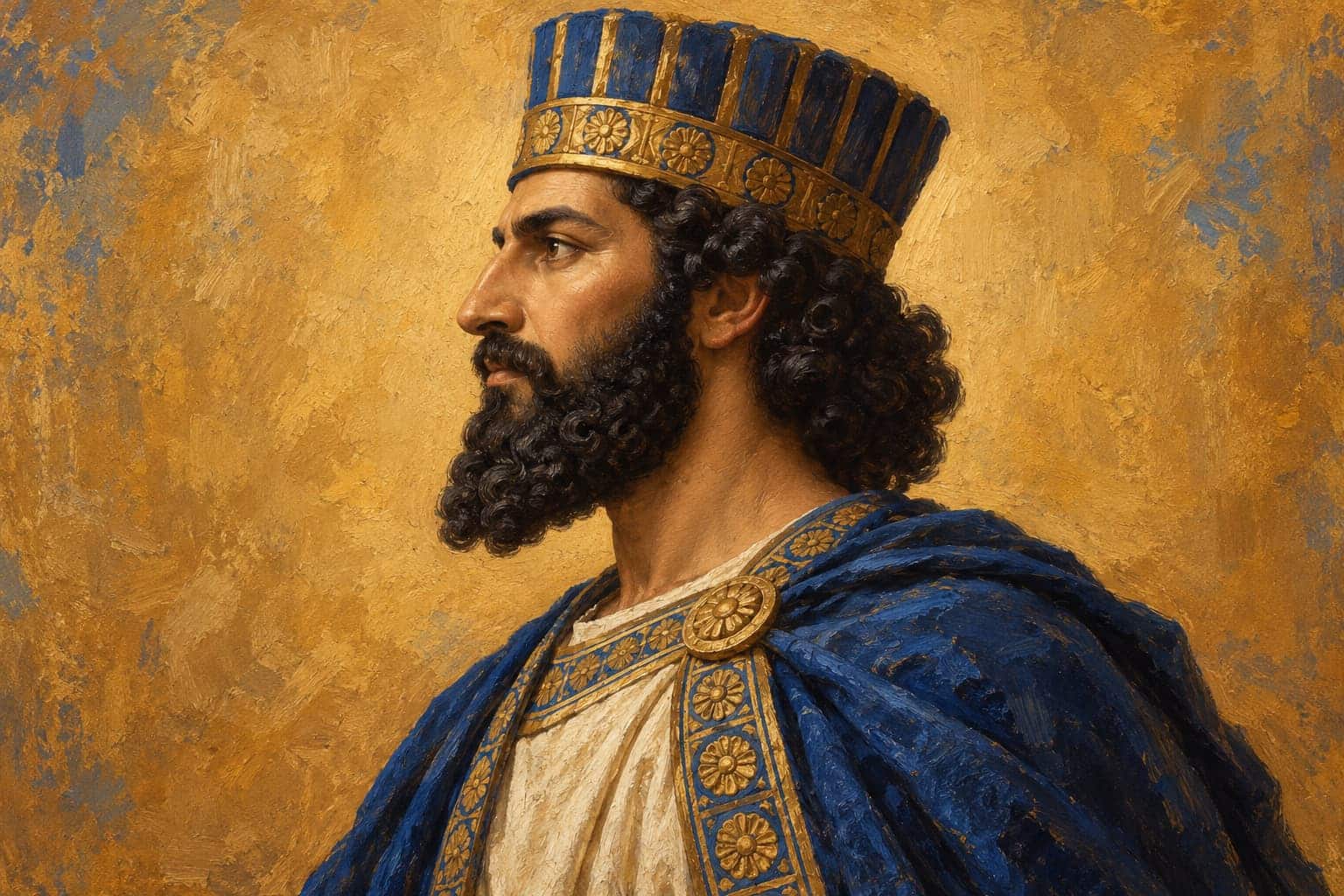
I love looking at ancient Persian art and recognising faces that remind me of people I know. The feeling of familiarity is real, even though I might be biased.
The same goes for DNA tests. Friends of mine who identify as Turkish have received ancestry results that group Turkish and Iranian ancestry together. After paying for a test, “somewhere around where your family already told you” was a bit underwhelming.
But those results estimate genetic ancestry by comparing samples with reference populations. Those results don’t mean that Turkish and Persian people are genetically indistinguishable. MedlinePlus explains the limits: companies use different databases, some populations have better representation than others, and migration complicates the picture.
My own family history has gaps. At least one of my grandparents lived in the mountains between Iran and Iraq. I’ve wondered whether that branch of the family was Kurdish or Arab, but you can’t determine it from geographic origin alone.
I haven’t taken a DNA test. It might tell me something about ancestry, but it won’t settle what I call myself. For now, Iranian is a description without pretending I know every branch of the family tree.
Does saying “Iranian” mean supporting the government?
I’m no fan of the Islamic Republic. I oppose its coercive religious rule and its treatment of people who dissent. My family’s experience gives me personal reasons, too.
There’s plenty to criticise without claiming to speak for every Iranian. In its September 2024 update, the UN fact-finding mission documented violence against women and girls in the enforcement of compulsory hijab and continuing repression linked to the Woman, Life, Freedom protests.
But I don’t want the Shah back, either. I think the Islamic Republic has done terrible damage to Iranian society, and I judge its record far more harshly. I’m giving you my view here; other Iranians can speak for themselves.
I also care about Iranians deciding Iran’s future. The revolution of 1979 was a mass domestic uprising, with a broad opposition that included secular and religious groups. But the revolution’s supporters wanted different outcomes, and Khomeini’s allies pushed rivals out of power. Historian Nate Barksdale’s account of the revolution describes both the opposition to the Shah and the struggle over what followed.
The authorities reported a 98.2 per cent yes vote in the 1979 referendum establishing an Islamic Republic, but that didn’t necessarily mean that people wanted clerical rule, or that people today would have consented to it.
Iranians should control their own future. Yes, I like it that the Iranian government prioritise self-determination, but that doesn’t mean I support all aspects of what they do, even if I do call myself “Iranian”.
Was Iran called Persia until 1935?
A lot of people in the West think that Persian changed its name to Iran. In many foreign languages, this may appear to be the case, because Persia was the usual name. Inside the country, the people of Iran had called it Iran for thousands of years. It’s more akin to Türkiye requesting people call it that rather than Turkey, which was just how English speakers heard the word.
In 1935, Reza Shah asked foreign governments to use Iran in official dealings. Sociologist Ahmad Ashraf discusses the change in his history of modern Iranian identity.
So “Persia changed its name to Iran” is convenient shorthand, but it can leave you thinking someone invented Iran in 1935. They didn’t. The Middle Persian form Ērān appears in Sasanian state usage from the third century CE, long before the Islamic Republic or even the arrival of Islam in Iran.
The word Iran comes through Middle Persian Ērān from an older Iranian form meaning “of the Aryans”. Here, Aryan refers to an ancient Indo-Iranian designation. European ideologues later used the word for their own purposes, despite its history.
Today, use Iran for the country. Persia still makes sense in historical and cultural contexts, though an ancient empire’s borders won’t match the modern state’s. If you’re talking about an empire, specify which Persian empire you mean.
Was the whole country ever called Fars?
This story is a bit like Holland vs The Netherlands.
“Fars” is a region within Iran, rather than a region that precisely matches the whole modern country.
Ancient Pārsa, later Pārs, was the Persian homeland in the southwest. The name survives in Fars province, whose capital is Shiraz. The Greeks extended a name associated with that homeland and its people to the much larger empire ruled by the Persians; European languages inherited forms such as Persia.
Geographer Xavier de Planhol’s history of Fars describes the resulting confusion between the smaller region and the much wider territory people called Persia.
That’s why Fars and Persia sound related. They are. But asking whether Fars is another name for all of Iran is a bit like assuming an empire and its rulers’ home province always cover the same ground.
Should you call the language Persian or Farsi?
I prefer Persian when I’m speaking English. In Persian, I say fārsi (فارسی).
It’s like saying French in English and français in French, or Spanish and español. A language can have a perfectly ordinary English name and a different name its speakers use among themselves.
There’s a technical pair of words for that: an endonym is a community’s own name; an exonym comes from outside it. You don’t have to know that to explain it, but it does make you sound smarter!
But English borrows words, including language names. Merriam-Webster includes Farsi as an English word. So asking “Do you speak Farsi?” isn’t wrong.
My reason for choosing Persian is that it connects the language I speak with the name English readers already know from Persian literature and history. It also works as a broad label when discussing Iranian, Afghan and Tajik varieties together.
I’ve used both names on this site so readers can find the articles. My Persian vs Arabic guide explains what those two languages share and where they differ.
Why does Persian have a P, but Farsi has an F?
The P is older. The F reflects Arabic influence.
The forms Pārs and pārsi have older Persian roots. Arabic adapted them as Fārs and fārsi, and Persian accepted those forms too. Linguist John R. Perry describes these specific Arabicised forms in Encyclopaedia Iranica.
Standard Arabic doesn’t have the sound /p/ or a dedicated letter for it. Persian does: پ is P and ف is F. Persian developed extra letters within its Arabic-derived writing system for sounds Arabic didn’t have.
But Arabic is a little random in what letters they use to represent foreign brands. Look at Pepsi and Sprite (from two different companies, I know), for example.
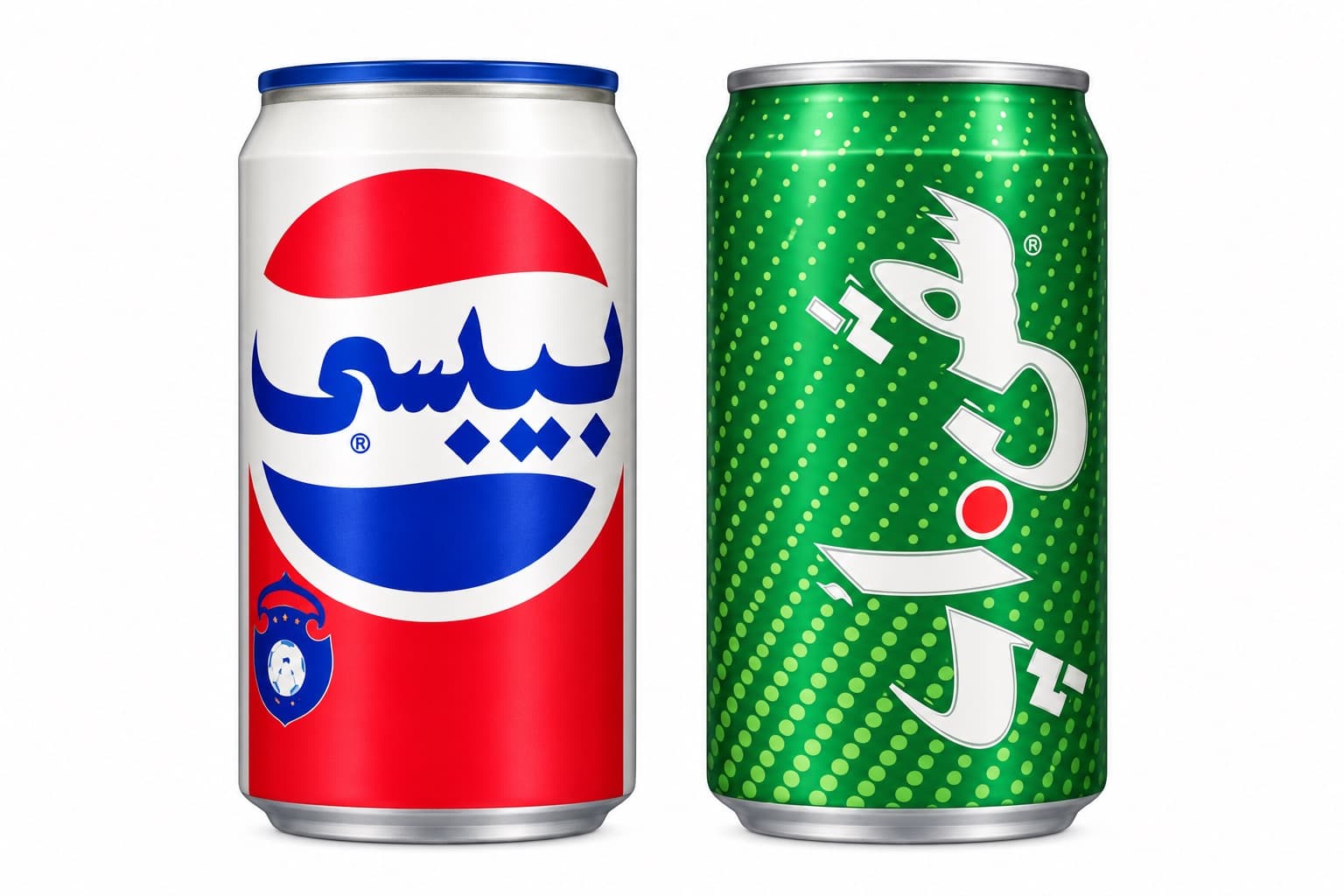
The Arabic brand name for Pepsi is بيبسي, as you can also see on Pepsi’s Palestinian bottler’s website. Its two Bs replace the English Ps, giving something like “Bebsi”, with vowels varying by accent. That’s B, written ب.
For Sprite, Arabic branding experts chose another approach, using a ڤ (a “P”) instead of a ب (“B”). The ڤ doesn’t exist in Arabic (or in Persian!) — it’s a letter used only for transliterations of brand names in Arabic.
So both pārsi (پارسی) and fārsi (فارسی) have a history. Pārsi preserves the older P; Fārsi is the ordinary modern name in Iran.
Can you speak “Iranian”?
“Do you speak Iranian?” usually leaves out the name of the language you’re asking about. In that everyday sense, it’s a bit like asking me whether I speak Australian.
Which I bloody well do, you drongo.
But Iranian languages is a real linguistic term. Persian, Kurdish, Pashto and Balochi belong to this branch of the Indo-European family. Iranica’s survey of Iranian languages explains the classification and its spread across several countries.
Azerbaijani belongs to the Turkic family. Arabic belongs to the Semitic branch of Afro-Asiatic. People can speak either and be Iranian; “languages spoken in Iran” and “Iranian languages” describe different groupings.
And Persian shares a writing system and many borrowed words with Arabic while belonging to a different language family. An alphabet doesn’t tell you a language’s ancestry.
Where do Dari and Tajik fit?
Persian extends beyond Iran. The main modern standard varieties have different national names:
- Iranian Persian: usually called Farsi in Iran.
- Dari: the official name for Persian in Afghanistan. Many speakers also call it Farsi.
- Tajik: the standard variety in Tajikistan, where the usual writing system is Cyrillic.
Gilbert Lazard’s account of Dari traces its long use as a name for Persian. John R. Perry’s account of Tajik Persian explains Tajik’s standardisation and Cyrillic writing system.
These varieties share a literary history and much of their grammar and vocabulary. Pronunciation, everyday words and writing conventions differ. Mutual understanding depends on the speakers, their regional varieties and how much exposure they’ve had to each other.
Use the name relevant to the person and context. Calling everything Farsi can obscure Dari and Tajik identities; insisting that a Dari speaker must say Persian can be just as clumsy. I’ve written separately about Afghan and Iranian Persian.
And what does any of this have to do with paradise?
There’s another P-and-F story I love: paradise and ferdows.
English paradise ultimately has an ancient Iranian origin. Iranologist Antonio Panaino traces it to a word for an enclosure or walled garden. A related Avestan form is pairi-daēza: roughly, “walled around”. Greek borrowed a form as parádeisos, which passed into Latin and eventually English.
Here are some of its relatives. They followed different routes, so this isn’t a single chain in which each row turns into the next.
| Language | Related word | Meaning |
|---|---|---|
| Ancient Iranian / Avestan | pairi-daēza | Enclosure; the root behind the later garden words |
| Greek | παράδεισος — parádeisos | Park or enclosed garden; later paradise |
| Hebrew | פרדס — pardes | Orchard or park |
| Arabic | فردوس — firdaws | Paradise |
| Modern Persian | فردوس — ferdows | Paradise; a literary word |
Iranica’s account of Achaemenid gardens discusses the word’s spread into Greek, Hebrew and Arabic. The Persian form ferdows came through Arabic; the English word followed the Greek and Latin route.
So English didn’t take modern ferdows and change its F back to P. Its P comes from the older branch of the word’s history. In everyday Persian, you’ll also hear behesht (بهشت) for heaven or paradise.
An ancient word for a garden has ended up in languages whose speakers disagree about almost everything else. I’ll take that.
What should you actually say?
- For the modern country: Iran.
- For someone’s background: follow their lead. Iranian can describe heritage; Persian can describe ethnic or cultural identity.
- For the language in general English conversation: Persian is my preference. Farsi is also accepted.
- For a particular standard variety: Iranian Persian, Dari or Tajik, as the context requires.
- For the province: Fars.
If you ask me, “Are you Iranian?” I’ll say yes. Ask whether I speak Persian, and I’ll say yes to that too. Ask whether I support the government, and you’ll need to sit down.