
Living in Cairo: 13 Things We Learned the Hard Way

Updated August 2026. We wrote this after living in Cairo and discovering a long list of practical details that were hard to understand before arriving. The original article mixed those durable observations with old exchange rates, SIM prices, transport prices and pandemic-era advice. I have removed the figures that no longer belong in a current guide.

Contents
Internet in Cairo: get a local SIM
Home internet in Cairo was usable for us but inconsistent. Mobile data was the dependable backup, and I would still get a local SIM early in a longer stay rather than rely entirely on an international roaming plan.
Vodafone, Orange, WE and e& are the names to compare. Packages change too often for me to keep quoting our old “8 GB for US$10” example as though it is current. Take your passport to an official store and ask for the best prepaid data package for the length of your stay.
Cairo is easier when you choose the neighbourhood carefully
Cairo is enormous, and a cheap apartment is not a bargain if you spend hours every week crossing the city. We stayed in furnished apartments that looked much nicer inside than the surrounding buildings suggested.
Dokki, Mohandessin, Zamalek and other central areas all produce very different daily routines. Our separate Cairo neighbourhood guide explains how we thought about where to stay.
The bawaab matters more than you expect
The bawaab is the doorman or building gatekeeper, but that translation undersells the role. They may know who enters, receive deliveries, deal with maintenance and act as an informal link between residents and the landlord.
That can make a building feel safer and easier to manage, but it can also mean less privacy than you expect. Visitors, photography from windows and other ordinary behaviour may attract attention depending on the building and neighbourhood.
Cash, cards and exchanging money
Egypt is still a place where carrying cash is useful, especially for small transactions. Card acceptance is much better in formal businesses than it was when we first lived there, but I would never head out with only a phone and no Egyptian pounds.
The old version of this page recommended the black market for foreign currency and quoted a series of exchange rates from different years. I have removed that advice. Exchange currency through banks or authorised exchange companies and check the current rate when you need it.
This is particularly relevant if you plan to extend an Egypt tourist visa, because current residence procedures require proof of converting the applicable foreign-currency amount through a bank operating in Egypt or an approved exchange company.
Getting around Cairo
Transport is part of the Cairo experience. The metro is cheap and useful on the routes it serves, while app-based cars remove much of the negotiation involved with street taxis. Microbuses cover an extraordinary network but take more local knowledge.
We wrote a separate guide to getting around Cairo. The most important planning point is simply to leave more time than the map suggests.
Sandstorms and weather
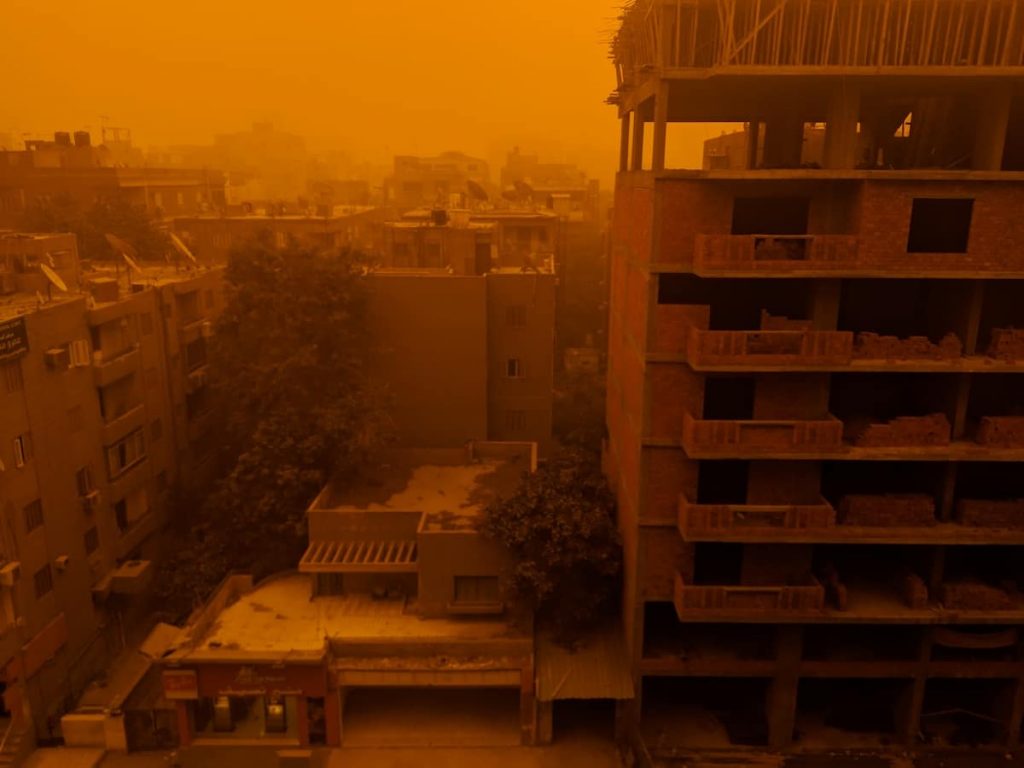
Spring can bring khamsin conditions: hot, dry, dusty winds that can turn the sky an extraordinary colour and reduce visibility quickly. I would not rule out an entire month solely because of them, as the old article did, but they are worth knowing about if you have respiratory issues or long outdoor days planned.
Photography: be more conservative than you would elsewhere
We were challenged several times over photography, especially around buildings or locations that did not look sensitive to us. Avoid photographing police, military facilities, checkpoints and other security-sensitive locations. At museums and archaeological sites, follow the site’s current photography rules rather than assuming a camera or tripod is permitted.
I have also removed the old anecdotal advice about travelling with a drone concealed in luggage. If you want to bring or operate a drone in Egypt, check the current permit and import rules before travelling.
Food delivery and eating in Cairo
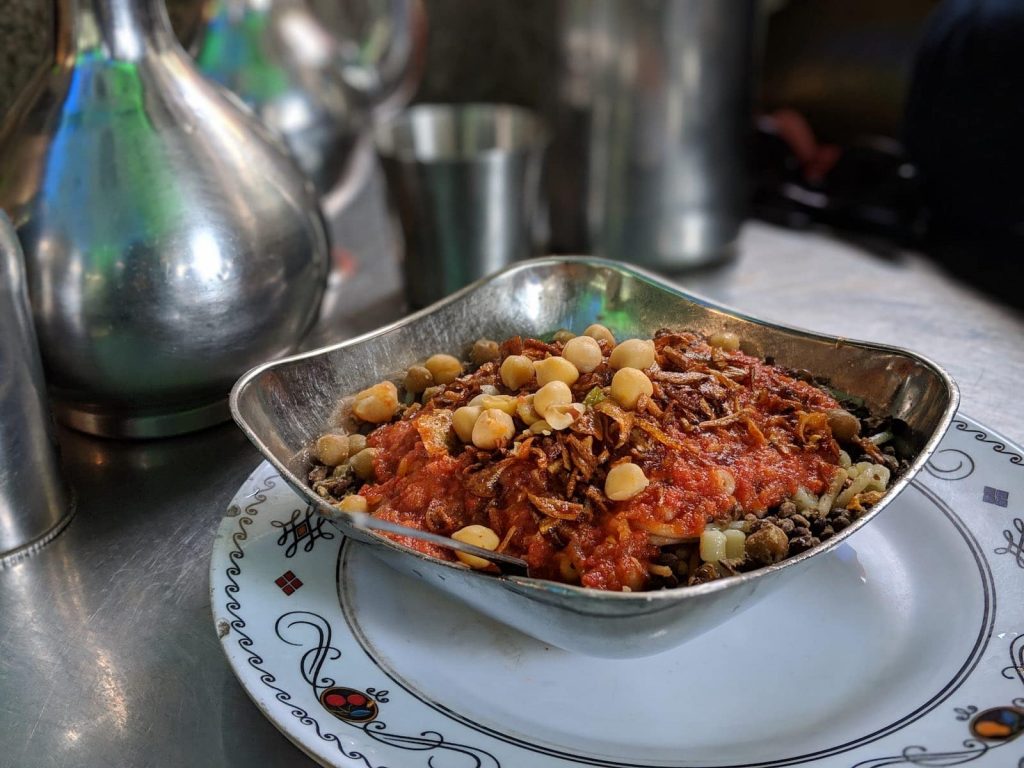
Food was one of our favourite parts of living in Cairo. Koshari, ful, ta’meyya, shawarma, kebab and kofta are easy to find, and delivery is a normal part of city life. Talabat is a useful app, but plenty of restaurants also handle their own orders.
If you’re trying to eat locally rather than treating every meal as a visitor experience, learn a few numbers and food words in Egyptian Arabic. Our Egyptian Arabic phrase guide is a good start.
Friday mornings feel different
Friday is the main weekly prayer day, and Cairo can feel unusually calm earlier in the morning before midday prayer. It is a good time for a walk through otherwise hectic areas. Mosques, naturally, become busier around prayer time.
What still surprises me about Cairo
The city can feel exhausting and generous in the same hour. Logistics take more patience than in many cities, yet everyday help from strangers can be remarkably easy to find. The best preparation is not memorising old taxi fares or SIM prices. It is choosing a sensible neighbourhood, getting local mobile data, carrying cash, learning some Arabic, and leaving yourself time.





Very informative and useful. Looking forward to part 2!
I loved reading your article! Great insight and I was surprised about a number of things of what it would be like to live in Egypt!