Best Less-Common Language Learning Resources: What Actually Works

Learning a less-common language is not just “learning Spanish, but with fewer apps.” The usual advice breaks down quickly. You may have no glossy course, no reliable graded reader series, no endless YouTube teachers, and no local class. But you can still build a strong study stack if you know which resource categories actually matter.
This guide is for languages where the resource shelf is uneven: Swahili, Amharic, Georgian, Armenian, Uzbek, Khmer, Kurdish, Yoruba, Quechua, Tibetan, Albanian, and plenty of regional or minority languages. The exact tools vary by language, but the winning pattern is surprisingly consistent: one structured course, one sentence source, one human speaker, one audio habit, and one place to ask questions.
Contents
Start with a real textbook, not a pile of apps
For less commonly taught languages, a boring textbook is often the most efficient first resource. It gives you a writing system, basic grammar, graded dialogues, cultural notes, and a path through the first few months. This is why I still think books beat apps for serious early-stage language learning — especially when your target language is not well served by mainstream platforms.
Look first for university-published courses, Peace Corps manuals, Defense Language Institute material, older academic grammars with exercises, or modern self-study books from regional publishers. For some languages, the best beginner book may be 30 years old and visually ugly. That is fine. Your first goal is not elegance; it is a dependable sequence.
- Choose a book with audio if possible. If there is no audio, pair it with a tutor immediately.
- Prefer books that teach full sentences and dialogues, not just word lists.
- If the script is unfamiliar, spend the first week learning to read it slowly and accurately.
- Do not collect five beginner books. Finish one main course, then use the others for review and alternative explanations.
Use sentence banks once you know the basics
Sentence banks are where less-common language learners can catch up fast. Tatoeba is useful for example sentences and translations, while Clozemaster can be helpful when your language is supported and you already understand basic grammar. These are not perfect sources — crowd-sourced sentences can contain awkward translations — but they are excellent for seeing vocabulary in context.
The trick is to use sentence banks actively. Do not just read 200 random sentences and hope they stick. Pull out useful sentences, check them with a tutor or native speaker, then turn the best ones into flashcards. A sentence like “I’m going to the market tomorrow” is more valuable than ten isolated nouns because it carries word order, tense, particles, and natural phrasing together.
If you are building sentence-based flashcards, this practical guide is a good next step: How to Use Anki — For Language Learners
Get a tutor earlier than you think
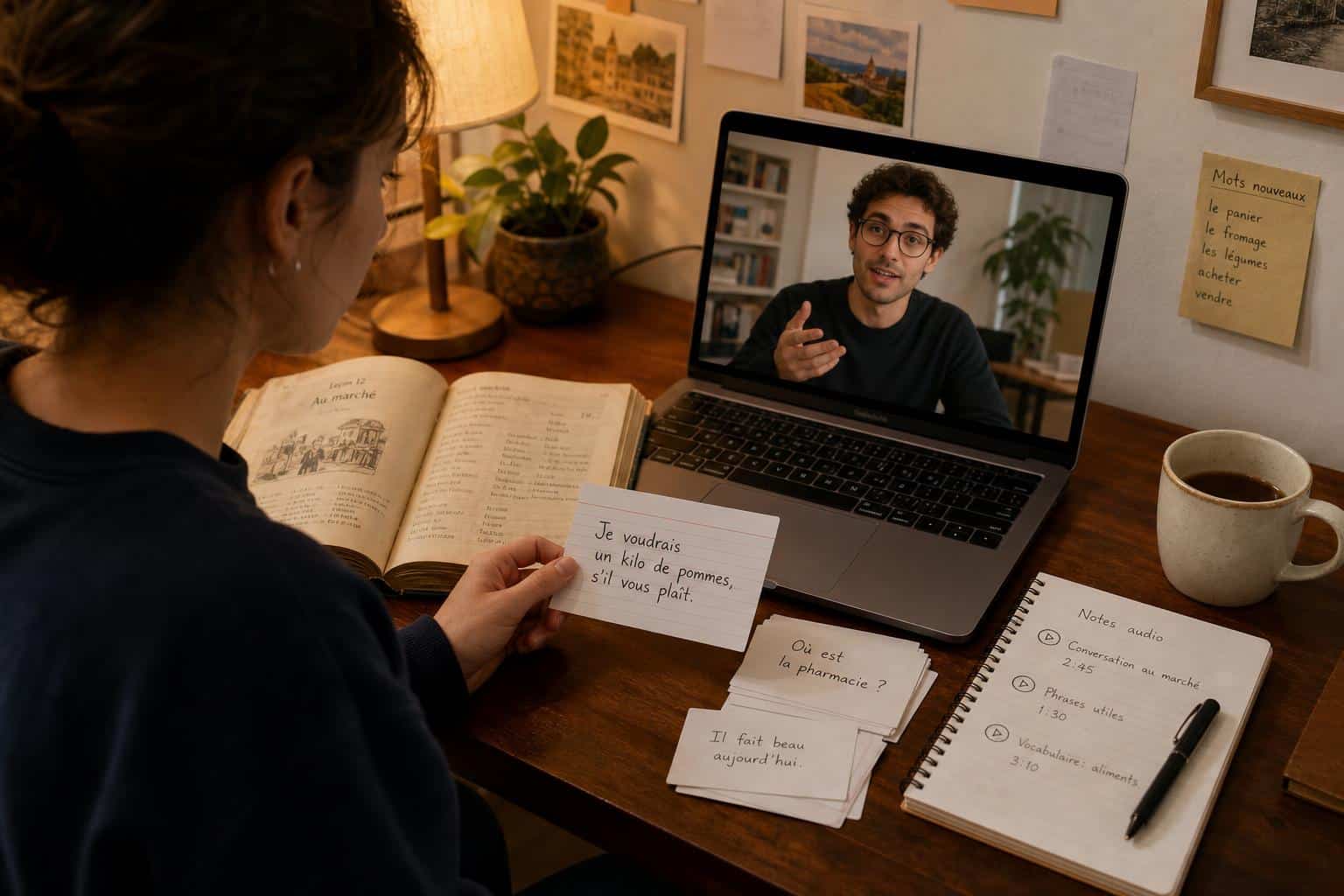
For less-common languages, a tutor is not a luxury add-on. A tutor is often your pronunciation model, grammar checker, cultural explainer, and motivation system. Platforms such as Preply and italki-style marketplaces are worth checking, but availability changes by language, time zone, and political geography. If you find even one good teacher, protect that relationship.
Your first tutor sessions should be concrete. Do not say, “Teach me your language.” Bring a page from your textbook, five sentences you wrote, or a short dialogue you want to master. Ask the tutor to correct pronunciation, record model sentences, and explain what sounds natural versus merely grammatical.
- Best use for beginners: pronunciation, script checks, survival dialogues, and correction of textbook exercises.
- Best use for intermediate learners: conversation around repeated topics, sentence mining, and fixing fossilized mistakes.
- Best use for advanced learners: register, dialect, humor, idioms, storytelling, and profession-specific vocabulary.
- Red flag: a tutor who only chats in English about the language but never makes you produce it.
Prioritize audio before you feel ready
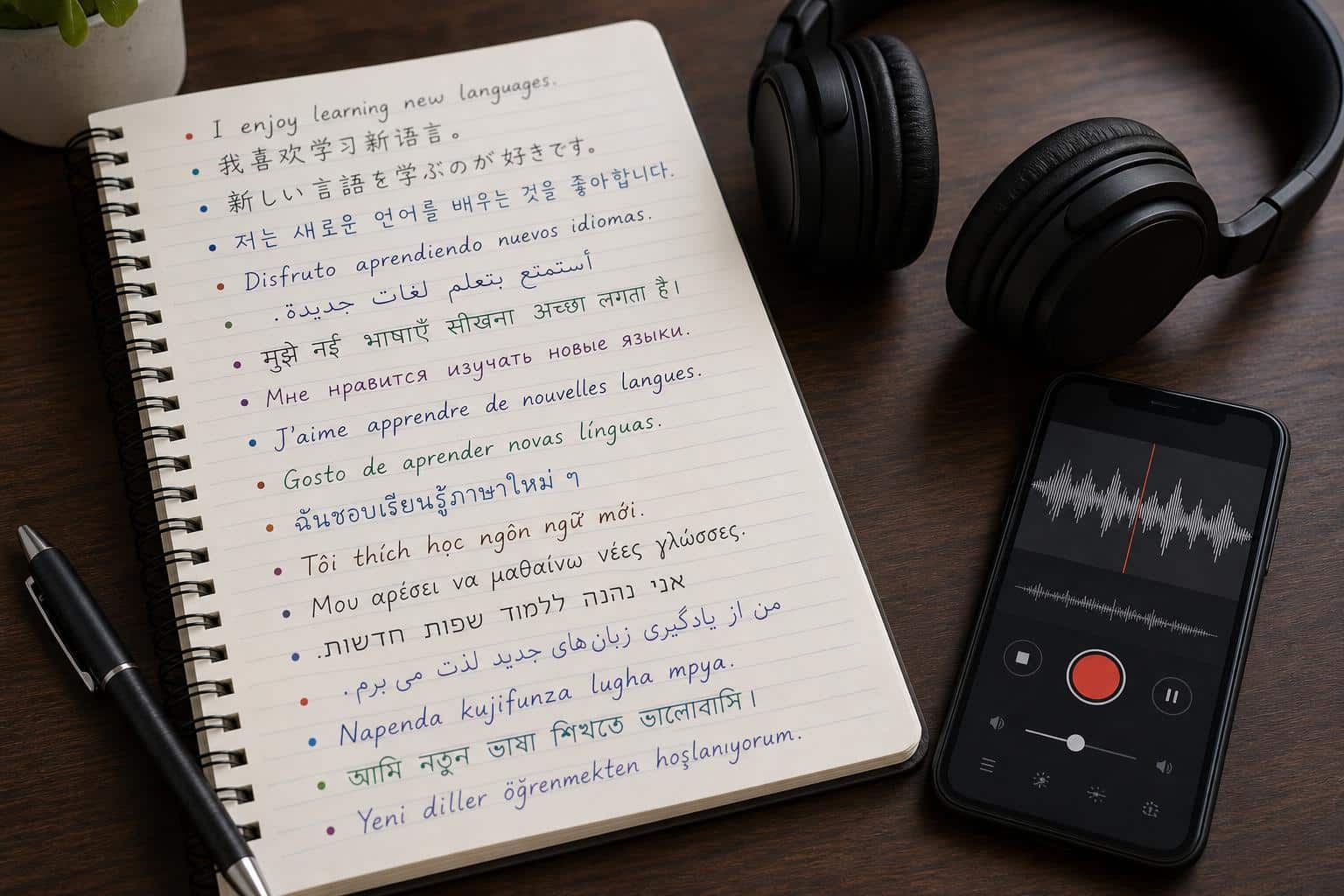
Audio is where many less-common language plans fail. Learners spend months reading grammar explanations, then discover that real speech sounds like a different language. Use Forvo for individual word pronunciation when available. Use audio courses like Pimsleur if your language is covered and you want speaking reflexes rather than grammar explanations.
For very under-resourced languages, make your own audio library. Ask your tutor to record ten useful sentences per week. Save voice notes from patient friends. Rip short clips from public radio, interviews, sermons, songs, or local news when legally and ethically available. Repeat the same one-minute clip until you can hear word boundaries. That skill is worth more than passive exposure to hours of incomprehensible material.
Use community forums, but verify everything
Reddit communities, Discord servers, Facebook groups, diaspora forums, university pages, and local WhatsApp groups can be gold mines. They are especially useful for dialect questions, slang, media recommendations, and finding teachers. They are also chaotic. One native speaker may confidently reject a phrase that is normal in another region, generation, or social setting.
When a community corrects you, ask three follow-up questions: Where would you say this? Who would say it? What would sound more natural? Those questions turn a correction into cultural knowledge. For less-common languages, the “standard” form is often only one part of the living language.
The practical study stack that works
If I were starting a less-common language from scratch, I would not begin by searching for the perfect app. I would build this stack in order: one main textbook, one audio source, one tutor, one sentence bank, one flashcard system, and one community. That is enough.
- Weeks 1–4: learn the script or sound system, finish the first textbook units, and copy useful sentences by hand.
- Weeks 5–12: meet a tutor weekly, record corrected sentences, and start sentence-based flashcards.
- Months 4–6: add native media with transcripts if possible, repeat short audio clips, and write short diary entries.
- After month 6: shift toward conversation, reading real posts or news, and learning the dialect or register you actually need.
The best resource for a less-common language is rarely one tool. It is a small, reliable system that keeps giving you structure, sentences, sound, correction, and real human context.
Less-common languages reward practical learners. You may have to tolerate clunky PDFs, imperfect recordings, and scattered communities. But that scarcity can be clarifying. Instead of chasing the newest app, focus on the five things every learner needs: a path, examples, audio, correction, and people. If your resources provide those, they are good enough to begin.