My Favourite YouTube Channels for Comprehensible Mandarin Chinese

I learned Mandarin to an advanced level and used it at work and in daily life. These days, I don’t speak it as much, but to keep it fresh in my mind, I listen a lot.
It may be redundant, but it’s still worthwhile to point out that the best way to practise speaking is… speaking! It exposes the words you can’t retrieve and gives a teacher or conversation partner something concrete to correct.
But listening should account for much more of your practice by volume. That is how real conversation works, too: you have to understand what another person just said before you can give them a sensible answer.
Mandarin makes this especially obvious. Knowing a character on a page doesn’t guarantee that you will recognise the word in connected speech. You need to hear tones, rhythm, particles and ordinary sentence patterns often enough that they stop sounding like a string of separate syllables.
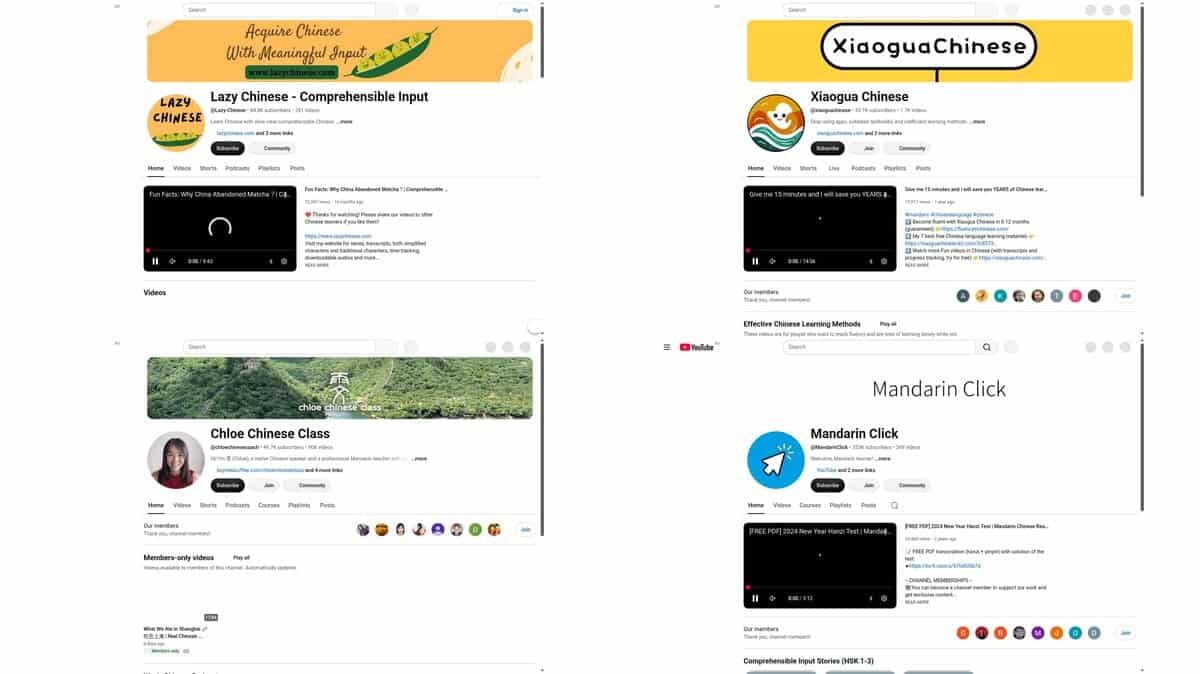
The channels below give you that practice without dropping you straight into native television. Some use drawings, objects and gestures. Others speak more slowly, repeat key words or choose topics that learners can follow from context. The goal isn’t to understand every word. You should understand enough of the message that your brain has something to work with.
If you are starting Mandarin from zero, first read my guide to learning Mandarin Chinese from scratch. Comprehensible listening works much better once you have learned Pinyin properly and can recognise a small core of common words.
Contents
The channels at a glance
| Channel | Best starting point | What I would use it for |
|---|---|---|
| Lazy Chinese | Beginner to intermediate | Short stories, cultural topics and clear Chinese-only explanations |
| Xiaogua Chinese | Advanced beginner to intermediate | A large library of stories, podcasts and everyday topics |
| Chloe Chinese Class | Advanced beginner to intermediate | Vlogs, conversations and slow-to-natural listening practice |
| Mandarin Click | Absolute beginner to intermediate | Carefully graded stories with strong visual support |
| BlaBla Chinese | Absolute beginner to intermediate | Levelled stories and learner-focused explanations in Chinese |
| Story Learning Chinese with Annie | Beginner to intermediate | Longer stories, games and relaxed listening sessions |
| Chinese Podcast With Shenglan | Intermediate | Podcasts and vlogs that bridge the gap to native content |
| Mandarin Corner | Intermediate to advanced | Street interviews, real accents and longer conversations |
Lazy Chinese: my easiest general recommendation
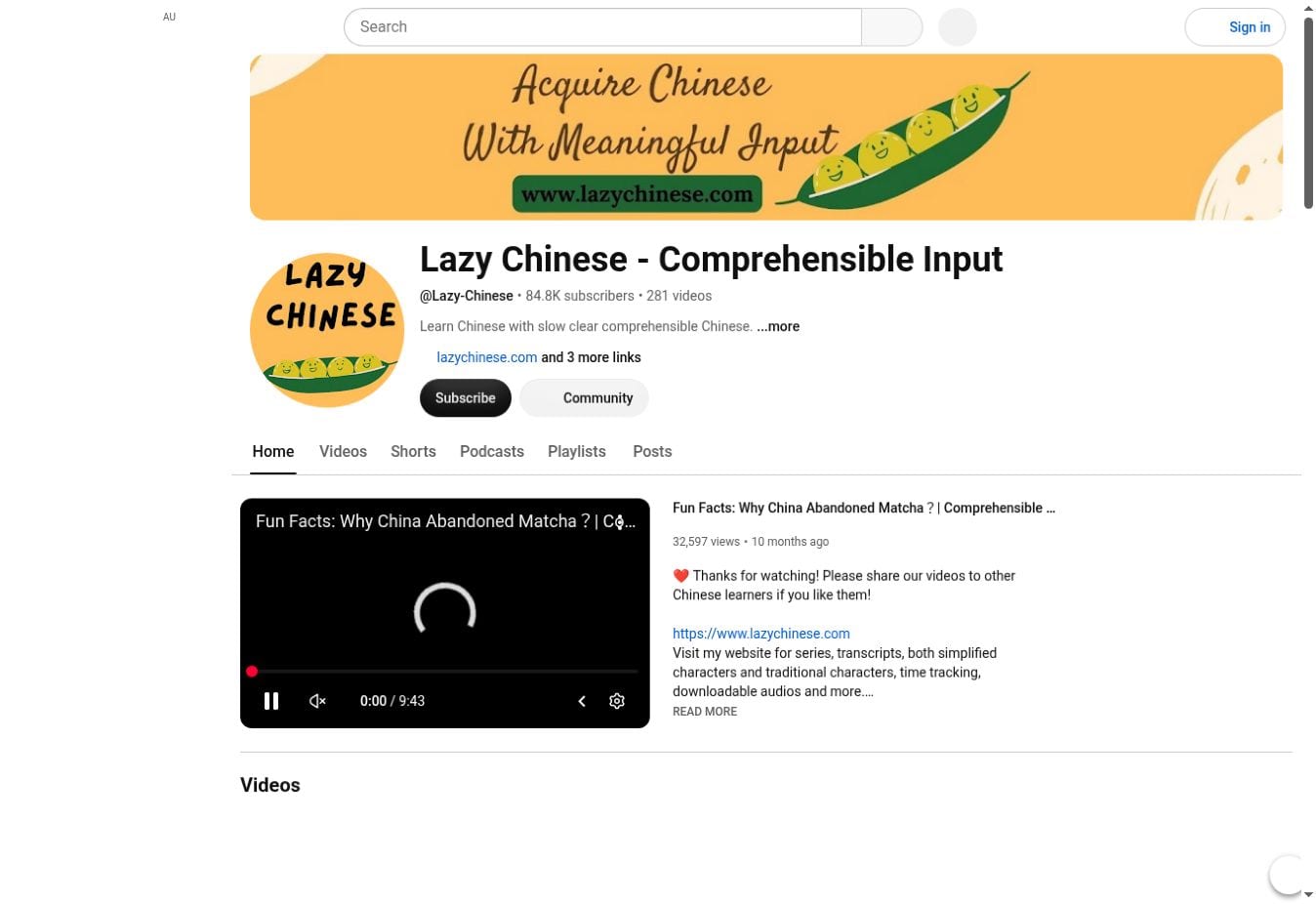
Lazy Chinese is one of the channels I return to most often. Probably because the banter is good… I actually quite enjoy just listening for fun, and to me this is the acid test of whether I’ll continue doing something at all!
The host speaks slowly and clearly, stays in Mandarin for most or all of a video, and uses repetition, gestures, pictures and simple explanations to keep the meaning within reach.
The library covers beginner stories, TPRS-style lessons, casual conversations and intermediate videos about Chinese food, history, social habits and current topics. That subject range helps once you have outgrown endless stories about buying fruit or introducing your family.
I would begin with one of the beginner or low-intermediate playlists and move up only when the easier videos feel genuinely easy. Some playlists carry ambitious level labels, but the visual support and measured delivery make them less difficult than an ordinary podcast with the same vocabulary.
Xiaogua Chinese: a huge library with plenty of variety
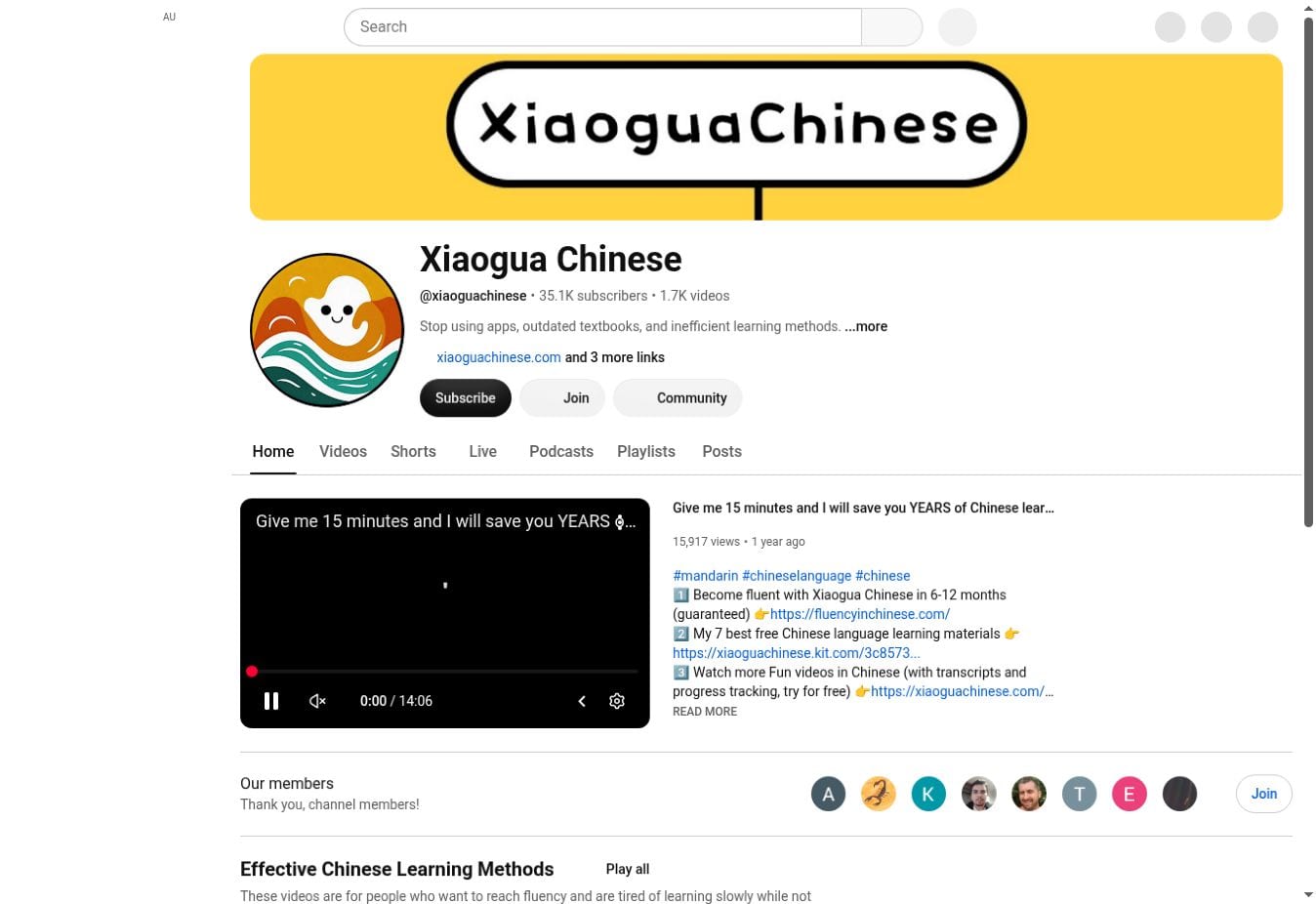
Xiaogua Chinese has an unusually large back catalogue. You can find short comprehensible stories, longer podcasts, travel videos, conversations, pronunciation advice and discussions of how to study Mandarin.
I like the story and podcast material most. The hosts repeat important words without turning every sentence into a formal grammar lesson, and they choose ordinary subjects that give you enough context to follow the main point. Videos are often labelled by level, which makes the large library easier to navigate.
Xiaogua also publishes a lot of learning-method content. I would treat that as a side dish. The real value comes from pressing play on another Mandarin story instead of spending the same fifteen minutes thinking about the ideal study system.
Chloe Chinese Class: vlogs, conversations and a natural next step
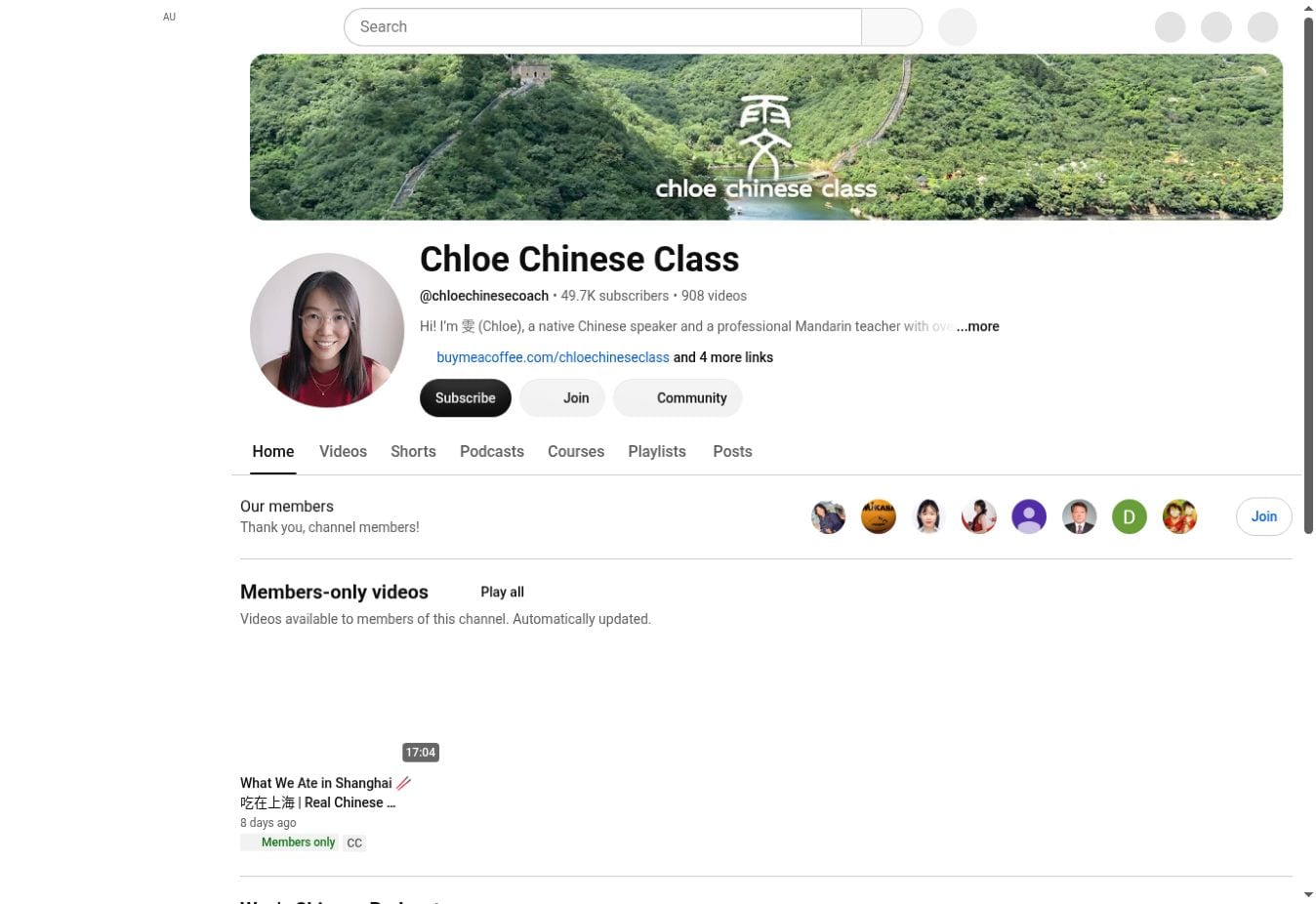
Chloe Chinese Class is another personal favourite because the channel gives you several kinds of listening practice rather than repeating one format. Chloe publishes learner podcasts, conversations, story-based lessons and vlogs about life, travel and food in China.
Some videos use a slower voiceover before giving you a faster or more natural version. That is a better progression than taking one recording and setting YouTube to 0.75 speed, which stretches the audio and changes its rhythm. Her vlogs also give words a physical setting: you can see the meal, street or train she is talking about.
This channel suits an advanced beginner who already knows basic sentence patterns and wants longer material. Chloe also has beginner lessons, but the broad vlog and podcast catalogue gives you more room as your listening improves. Some recent videos sit behind channel membership, while the public library is still large.
Mandarin Click: the best place to start with graded stories
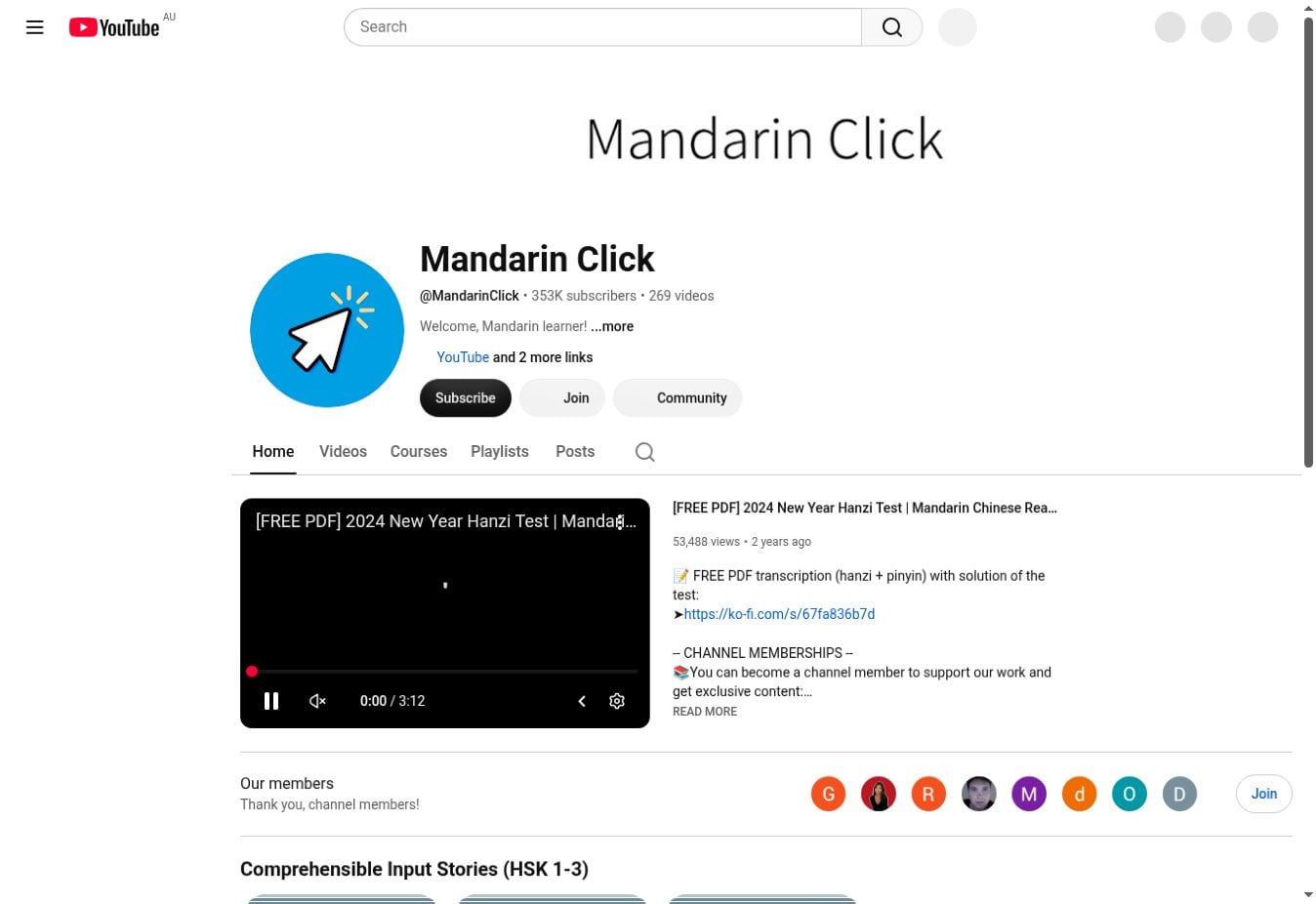
Mandarin Click is the channel I would give to someone who has only just learned Pinyin and a little basic vocabulary. Its strongest videos are short, slow stories with pictures, facial expressions and body language that carry much of the meaning.
The playlists separate material by HSK level and include beginner stories, intermediate stories and longer podcast episodes. Many videos also offer Chinese characters, Pinyin or English support. I would hide the English subtitles on the first pass, then turn on Chinese subtitles if I need help separating the words.
The speech can sound more deliberate than everyday conversation. That is appropriate at this stage. Mandarin Click gives you a manageable first rung before you move to channels where the speaker relies less on pictures and talks for longer.
BlaBla Chinese: clearly separated levels and visual stories
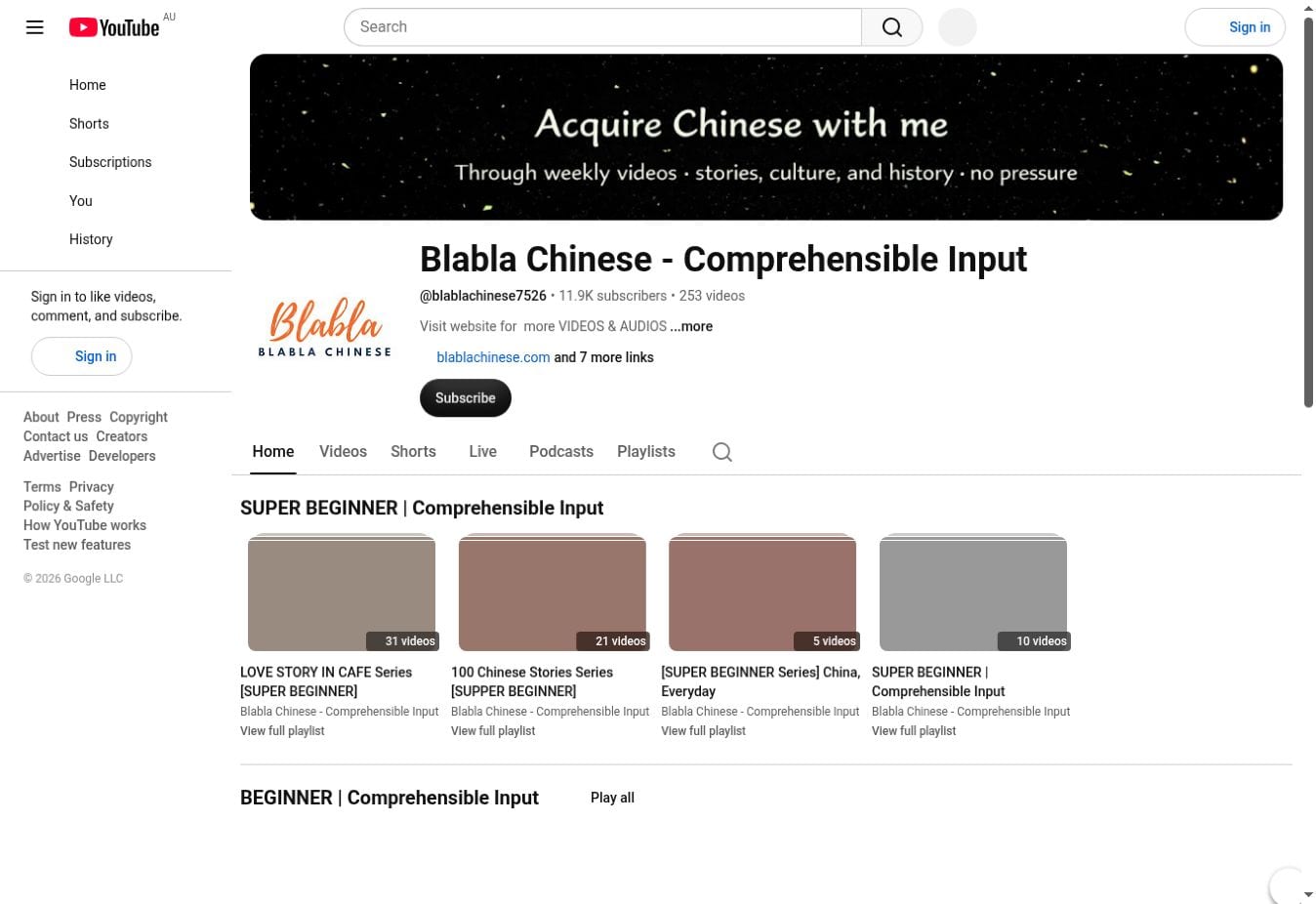
BlaBla Chinese organises its videos into super-beginner, beginner and intermediate playlists. That makes it easy to find a series at the right level and stay there for several hours instead of choosing a completely different difficulty every time YouTube recommends something.
The super-beginner material uses simple stories, recurring situations and visual clues. Later videos talk about work, travel, safety, social habits, Chinese history and personal experiences. The host keeps the speech learner-friendly but doesn’t spend most of the video explaining Chinese in English.
I would try BlaBla Chinese alongside Mandarin Click at the beginning. Keep whichever host and story style holds your attention. Listening practice only works at volume when you are willing to watch the next video.
Story Learning Chinese with Annie: relaxed stories and longer sessions
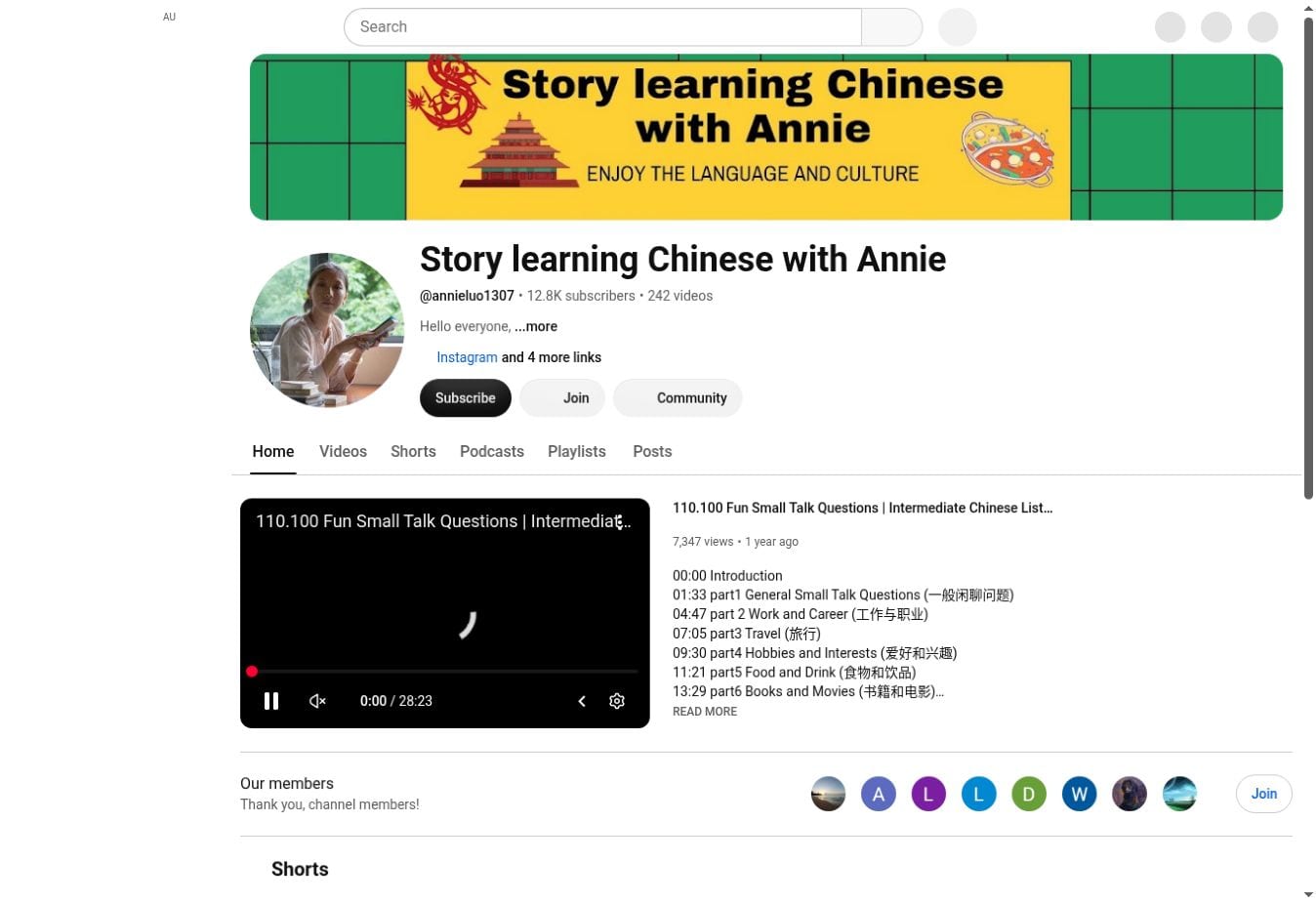
Story Learning Chinese with Annie mixes stories with vlogs, picture prompts, listening games, shadowing and question-based practice. Many videos run longer than the short beginner stories on other channels, so Annie is a good choice when you want a twenty- or thirty-minute listening session.
Her delivery is calm and careful, and the topics give you repeated everyday vocabulary without feeling like a list of sample sentences. The small-talk questions, spot-the-difference tasks and story challenges also ask you to predict or answer, which makes the listening more active.
I would use this channel once short beginner videos have stopped feeling difficult. You don’t need to understand every detail of a long story. Follow the people, problem and outcome, then replay a section if one part seems worth closer attention.
Chinese Podcast With Shenglan: the bridge to ordinary native content
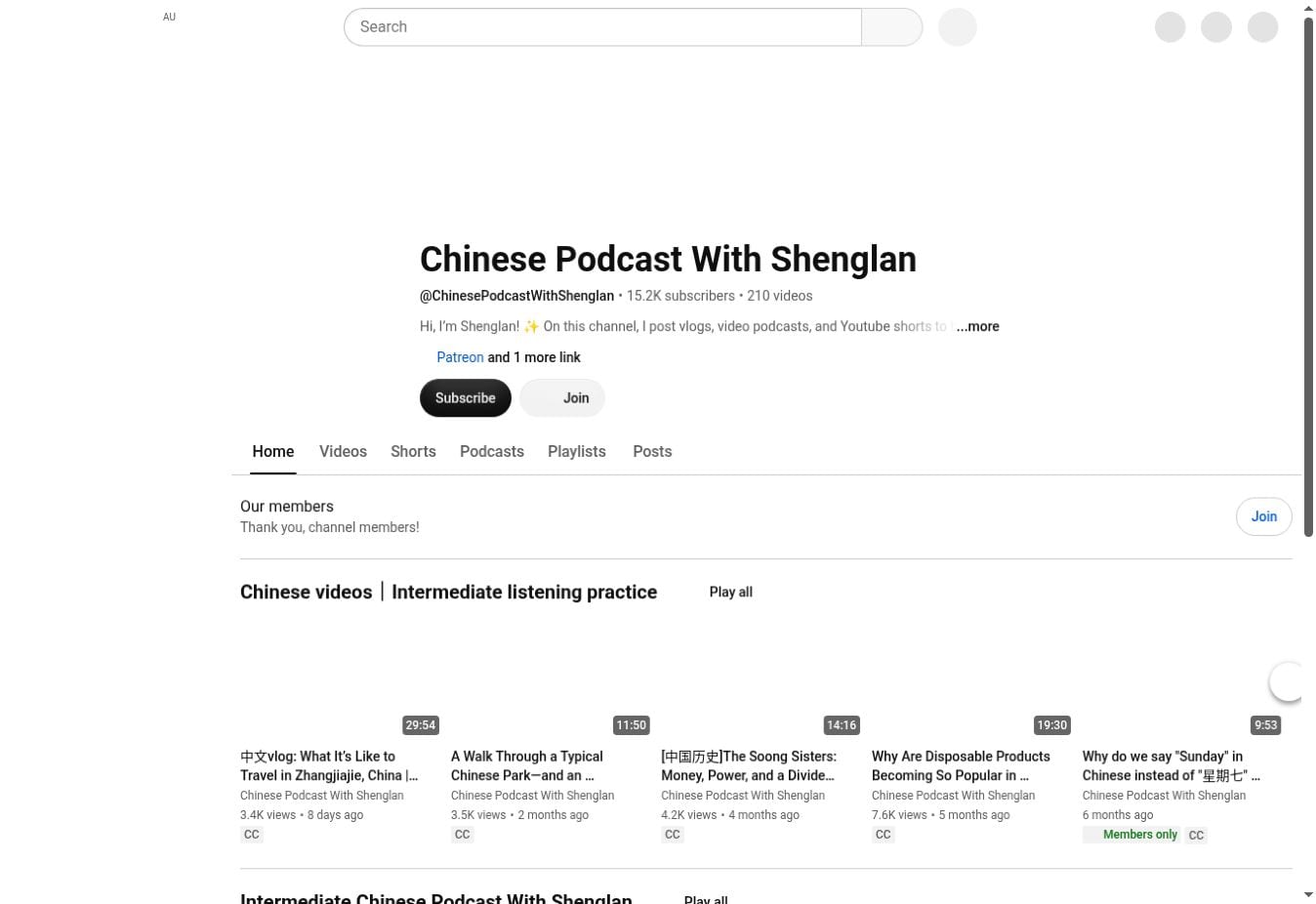
Chinese Podcast With Shenglan is aimed mainly at intermediate learners. Shenglan publishes video podcasts, vlogs and shorter listening pieces about travel, daily life, language, news, history and social questions.
The speech is clearer and more controlled than a native podcast, but the videos rely less on constant visual explanation. That forces you to follow the language itself. Longer episodes also train the concentration you need when a real conversation moves beyond greetings and familiar scripts.
Start here when beginner stories feel comfortable but native vloggers still lose you after a minute. I would choose a familiar topic first. If you already know what the speaker is likely to discuss, you can spend more attention on how they say it.
Mandarin Corner: real interviews and a wider range of accents
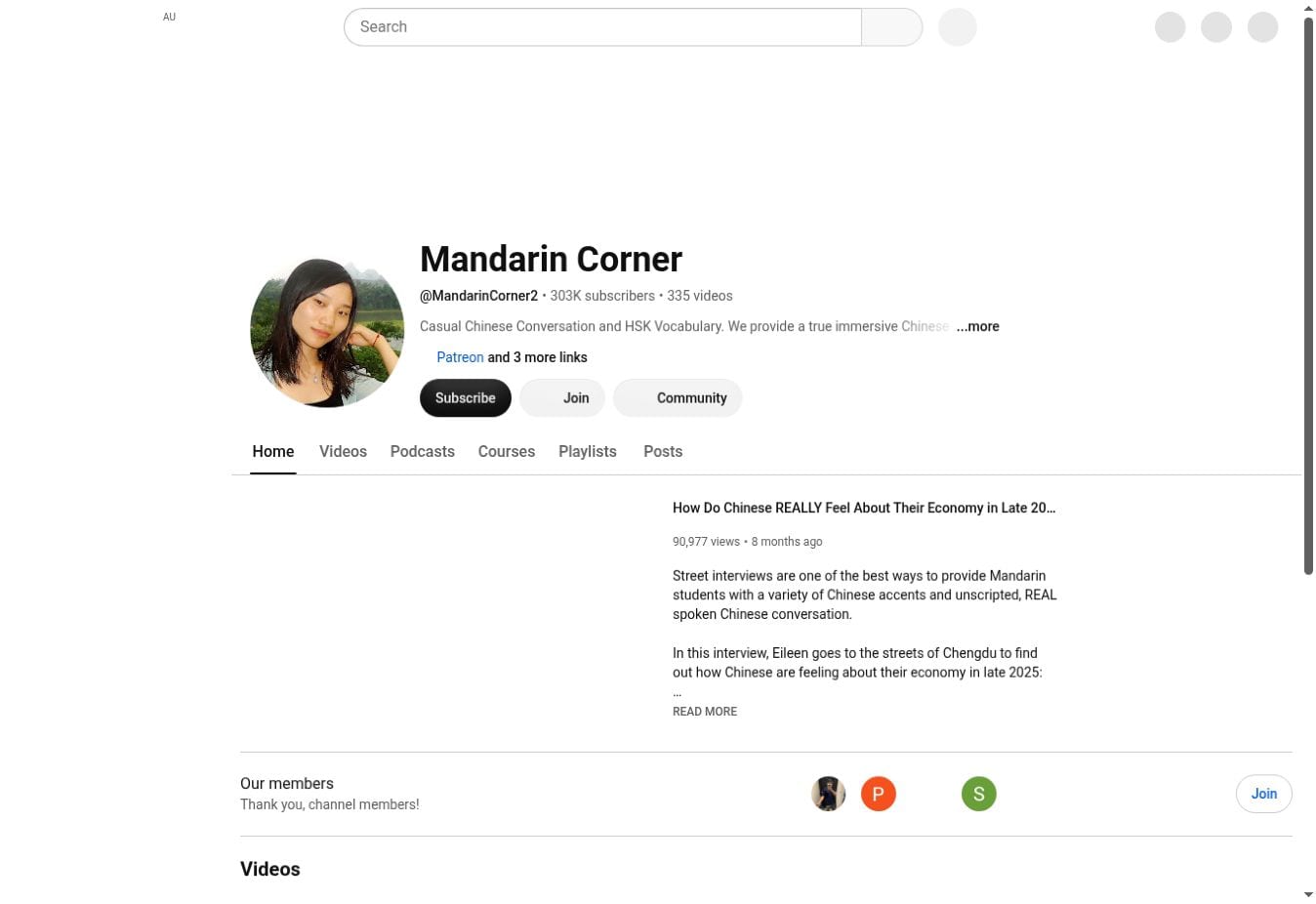
Mandarin Corner is where I would go after I had built a solid base with the other channels. It has learner courses and HSK vocabulary videos, but its long interviews and conversations are the main attraction.
Street interviews expose you to people who don’t all speak with the same teacher voice. You hear different ages, accents, rhythms and ways of answering a question. Mandarin Corner supports much of this material with detailed subtitles or literal translations, so you can check what you missed after trying to listen normally.
This is harder material. A serious elementary learner can use selected videos with subtitles, while an intermediate or advanced learner can listen for longer stretches before checking the text. The interviews also teach you about work, family, money and social attitudes in China through actual answers rather than a scripted cultural note.
How I use comprehensible Mandarin videos
I don’t turn every video into a study project. That would destroy the main advantage of YouTube: you can get a lot of listening without preparing a lesson.
Often, I throw on a podcast while on a driving or cycling commute I’ve done dozens of times already and where I don’t need to consult a map, just look for traffic.
- Choose a level where you are interested in the main message and know a few words. “Weird things our foreign boyfriends do”? Sold!
- Replay good material, not everything. A second pass often reveals much more. More than that can get boring.
- Let most listening stay extensive. You don’t need to pause and look up every unknown word. Follow the story and allow repeated words to become clear from context.
- Say a few lines aloud. Shadow a sentence with a rhythm you want to copy, or summarise the video to a teacher or conversation partner.
Listening and speaking support each other. A tutor can correct your tones, ask follow-up questions and show you where your comprehension failed. My italki review explains how I choose and use online teachers, while my Speechling review covers shorter listen-and-repeat pronunciation practice.
Where I would start
For your first comprehensible Mandarin videos, start with Mandarin Click or BlaBla Chinese. Once you know basic sentence patterns, add Lazy Chinese, Xiaogua Chinese and Chloe Chinese Class. Story Learning Chinese with Annie gives you longer sessions, while Shenglan and Mandarin Corner help you cross into more natural intermediate material.
Don’t wait until your vocabulary feels complete. Pick a video where the message is mostly clear and listen. Then do it again tomorrow. Twenty understandable minutes every day will train your ear far better than saving a hundred channels you never watch.